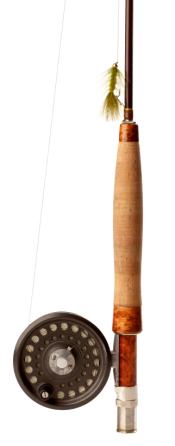
One of the most enjoyable parts of fly fishing could be tying your own flies. While they are readily available for sale pre-made in many stores, when you take the time to tie your own, you can make the fly fishing flies look even more realistic than those you can buy in a store.
Fly tying isn’t as difficult as it might first seem. You need to have some basic tools such as a fly vice, scissors, pliers, and thread. The equipment you use can make all the difference in quality work and shoddy work. The goal is to make your flies look as identical to a fish’s food source as is humanly possible.
You can find supplies for tying in various places. Besides the vice, scissors, and pliers, you will want to have on hand the following items:
* Hooks of various shapes and sizes
* Different colors and gauges of thread
* Fur from animals such as mink or fox
* Feathers from pheasants and peacocks
* Craft cement
Precision is the key to accurate fly tying. You should start out with a picture of the fly you are trying to replicate. You can find pictures of may flies, caddis flies, and other natural food sources in many places on the Internet. Once you have a picture, just get materials that will mimic the look and try to duplicate it.
Start out by wrapping thread around your hook and then add fur and feathers as you go securely tying them to the hook. As you go, you will continue to add materials until you achieve the look you are going for. Of course, there’s a little more to it than that, but that is the general idea.
You can take classes on how to tie your own flies and you can even find instructional videos online. When you start taking an interest in fly fishing, it’s best to stick with the pre-made flies, but as you gain more experience, you will want to start experimenting around with different lures to bring the fish to your line.
Tying Flies for Fly Fishing


Fly Fishing Basics
You load your fly fishing gear into your vehicle and head out to the nearest trout stream that you know of. You park the vehicle and head across a pasture. You're glad the owner is a friend of yours, as you have blanket permission to fish on his land. You walk down a steep incline to the crystal clear stream, slip on your thigh waders, fill your fly fishing vest with various types of flies and wade into the stream.
When you are in position, the tip of your rod should be in the four o' clock position with 20 feet (6 meters) of line extended beyond your rod's tip. Trap the fly line between the fly rod handle and your index finger. To begin the back cast, bend your elbow, raise your forearm and move the rod tip from four o'clock to eleven thirty and lift the line from the water. Pause for a moment at this point to allow the line to extend behind you before casting the rod forward. Allow the rod to follow through as the line extends to its full length in front of you. Then continue to work the line in this manner. Suddenly, as you work your rod and line, a fish strikes. The fight is on and you successfully land the fish. You've just learned the art of fly casting.
Fly fishing is an ancient method of angling. It was primarily developed to catch trout and salmon. Today, it is still used to fish these species, but is also used to catch bass, carp, pike and a wide range of saltwater fish. The difference between casting and fly fishing is that in casting you use the weight of your bait, sinker and bobber to propel your cast. In fly fishing, the weight of the line propels your line forward and puts your fly into position. The fly cannot do this, as it is essentially weightless. The goal in fly fishing is to present the fly gently and to always be in control of it.
When you fly fish, you need special fishing equipment that includes a fly rod and fly reel, a special fly fishing line and fishing flies. These are tied onto your hook with feathers, fur, thread or other materials in colors and sizes that represent natural prey. The key to successful fly fishing is balance. The rod, reel and line, as well as the tippet all have to match in order to have a positive fly fishing experience.
Rod, Reels and Lines
Fly fishing rods are very lightweight and long. The line provides the casting weight and is heavy. It can be of differing density, depending on whether you want the fly to sink or float. Line is matched to your rod by weight. Look near the fly rod butt to find out what line weight must be used. Graphite rods are best because they can produce any action that you wish to use. If you are a beginner, buy a basic and moderately priced rod, or borrow one from a family member or friend.
Flies and Leaders
Flies weigh very little. The fly is usually attached to the line by a leader that is two to three meters in length (6 to 9 feet). The leader often tapers to a fine end. This is called a tippet. Tippet size range from 8X, which is the smallest, to 0X, which is the largest. Tippets are set in units of .001 inches. To match the tippet to the fly, you must subtract from eleven and multiply by .001.
For example to find the diameter of a 4X tippet, you would subtract four from eleven. That equals seven. Now, multiply by .001. This size would be .007. What if you have a # 18 fly? How would you calculate tippet size? You would put eighteen over four and calculate. The answer would be 4.5. Since there is no 4.5 X tippet, you would move to the next largest size, which would be 5.
Types of Fly Fishing
There are two types of fly fishing - dry and wet. Wet flies are fished beneath the water surface and are divided into several types, including live wet flies, lures and nymphs. Dry flies float on the water surface and are coated with a substance called, 'floatant' to make this possible.
If you are interested in fly fishing and can't decide which equipment you need to have a positive fishing experience, ask an experienced angler for help. This can be a family member, friend, someone from the local angler's club or a staff member of the local fly fishing shop. Fly fishing is not as hard to learn as it appears to be. Have fun and enjoy that big catch.